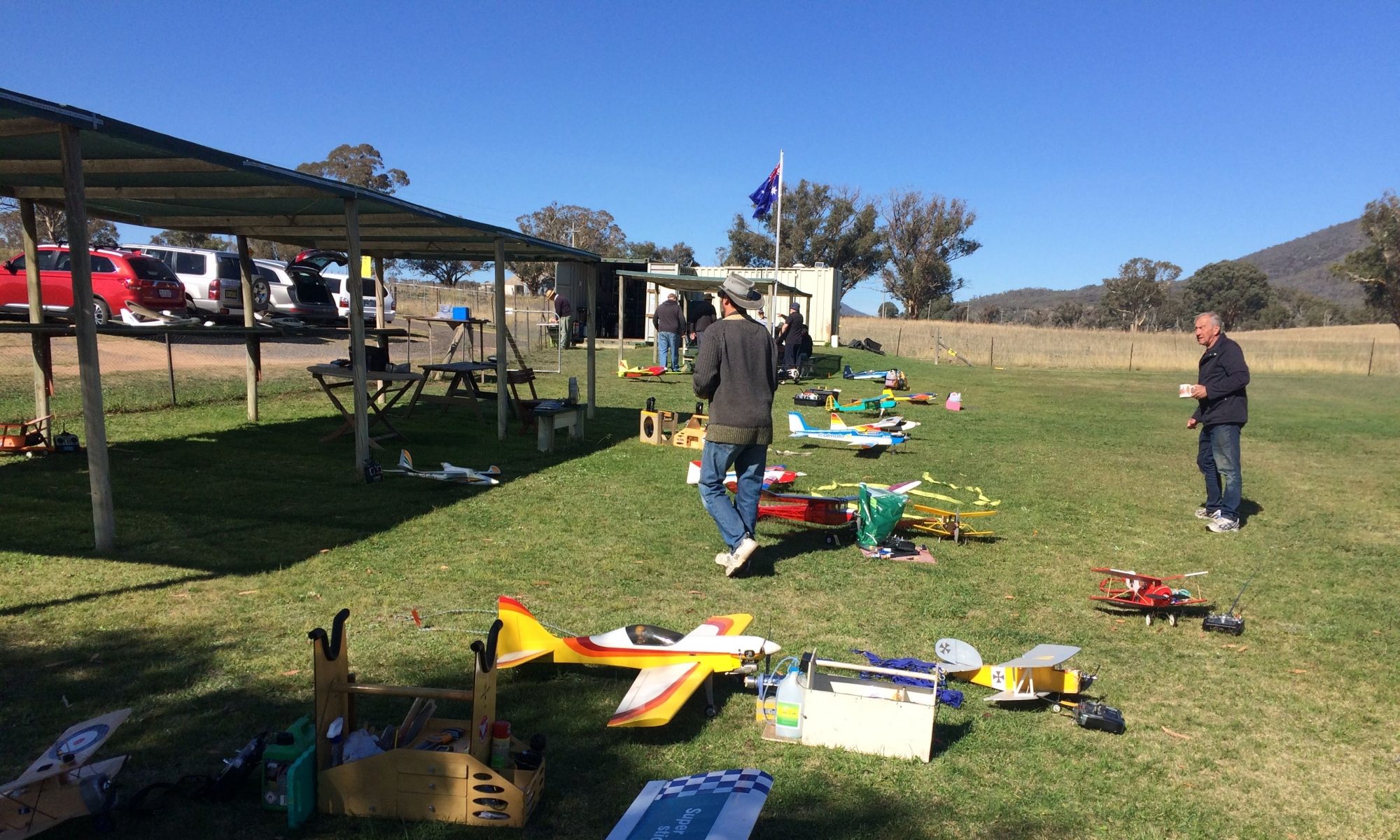

Over recent years I have noticed that many pilots, myself included, are landing wider and wider on the runway. This in turn encourages the mowing team to have to mow the strip wider and wider into ground that has never been properly smoothed out and consists of a lot of grass clumps rather than the relatively even cover that is on the strip proper.
As a result I thought I would put together a little visual document of what markers we might want to look for, though the view will be a little different if you a doing a short final leg such as coming in over the dam OR along the fence line south of the creek.
Coming in from the South – Most Common
When coming in from the south, pilots are put off by the large gum tree that is just to the east of the runway, but as you can see when looking south on the centreline of the runway it is quite a way from the flight path unless you have a model that is over 4m in wingspan as can be seen in the the image below.
The ideal approach would be by lining up on the gum tree in the distance, and just fly it onto the ground.
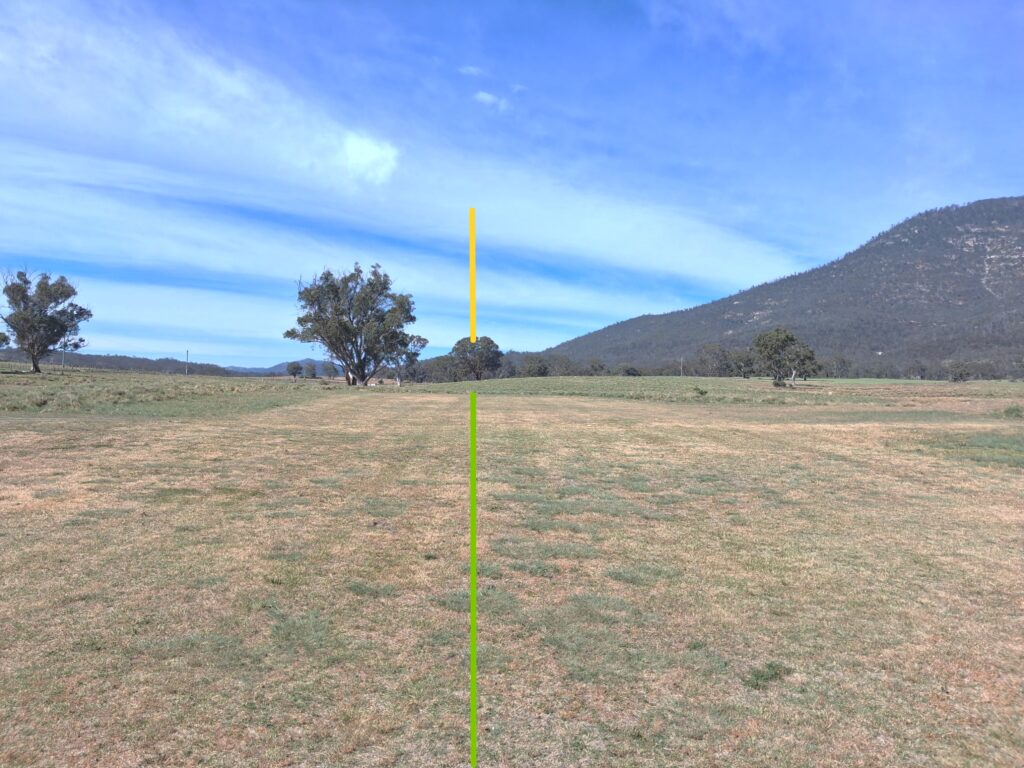
If only we could stand here when we are landing our models it would be so much easier to get it right wouldn’t it. However we stand to the side in the pilots box so the view of that tree is somewhat obscured by the one closer in.
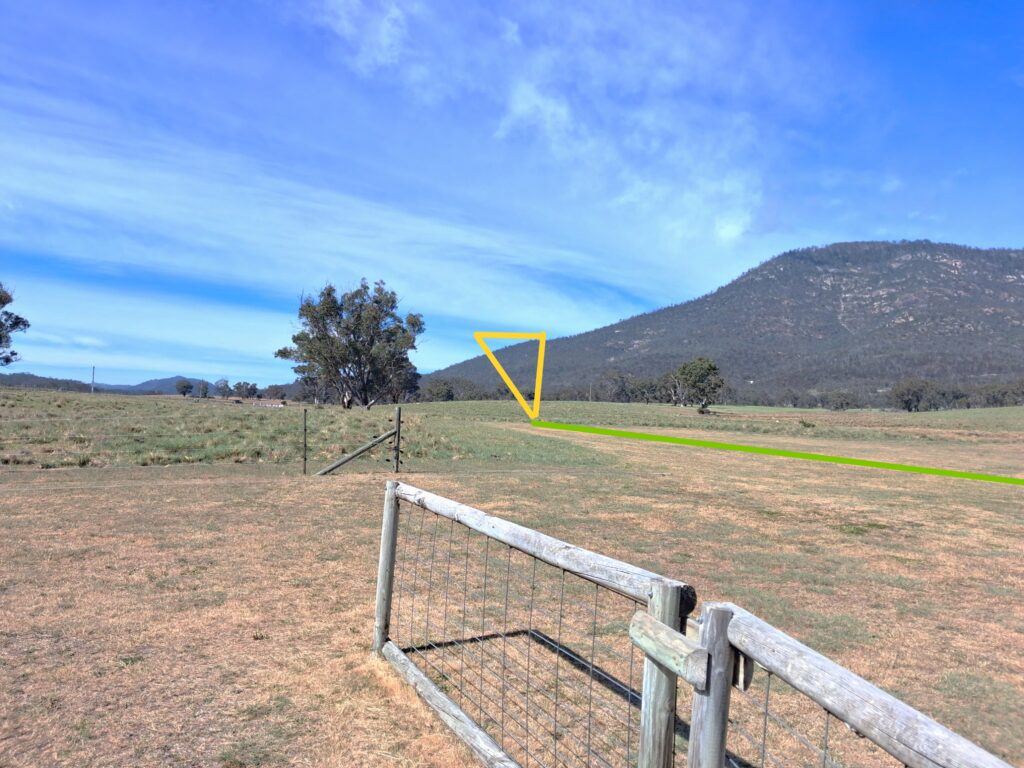
What I try and do is actually set up my approach with the model coming directly towards me from roughly over the low saddle on Mt Tennent as shown in Figure 2. Using this area as an approach indicator should get you reasonably close to the centreline, rather than coming in over the dam.
Coming in from the North – more challenging
The approach from the north can be somewhat more of a challenge mainly due to the extra vegetation that you have to avoid. The centreline is actually between 2 trees just over the creek, which for those wanting to test their luck, can actually be flown between with some safety.
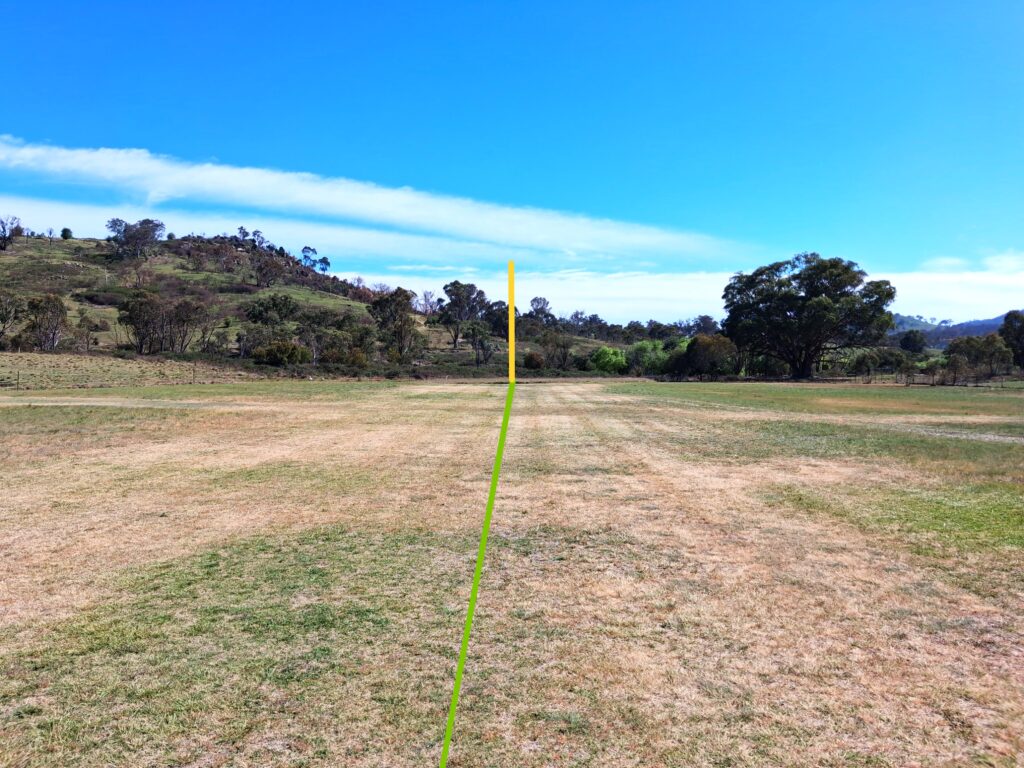
There are a couple of options that you can use , depending on how you are feeling on the day. The long approach sees you flying along the hillside, or over the ridge and then turning to come down the slope, the other is to fly along the creek line, inside or slightly above the tree line if possible then turning.
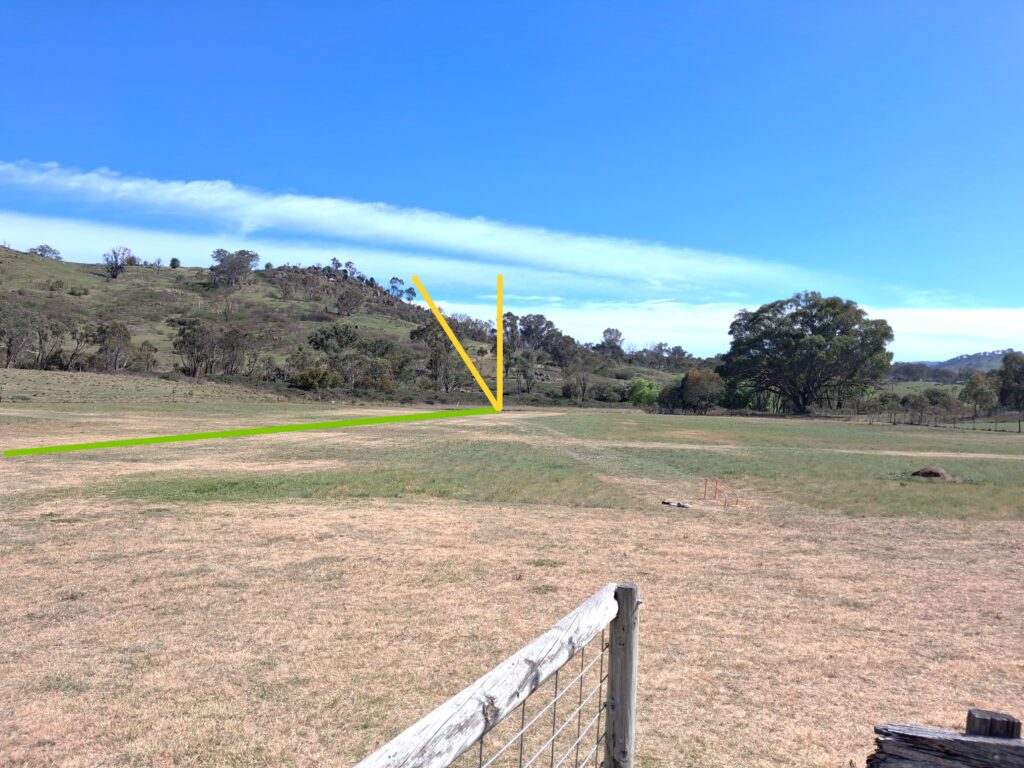
I believe this is the better set of angles to look at coming in on as the model is always flying towards you however as can be seen in Figure 5 there is a wider option that will place you more inline with the axis of the runway BUT can be a little more difficult as the model is flying across your line of sight.
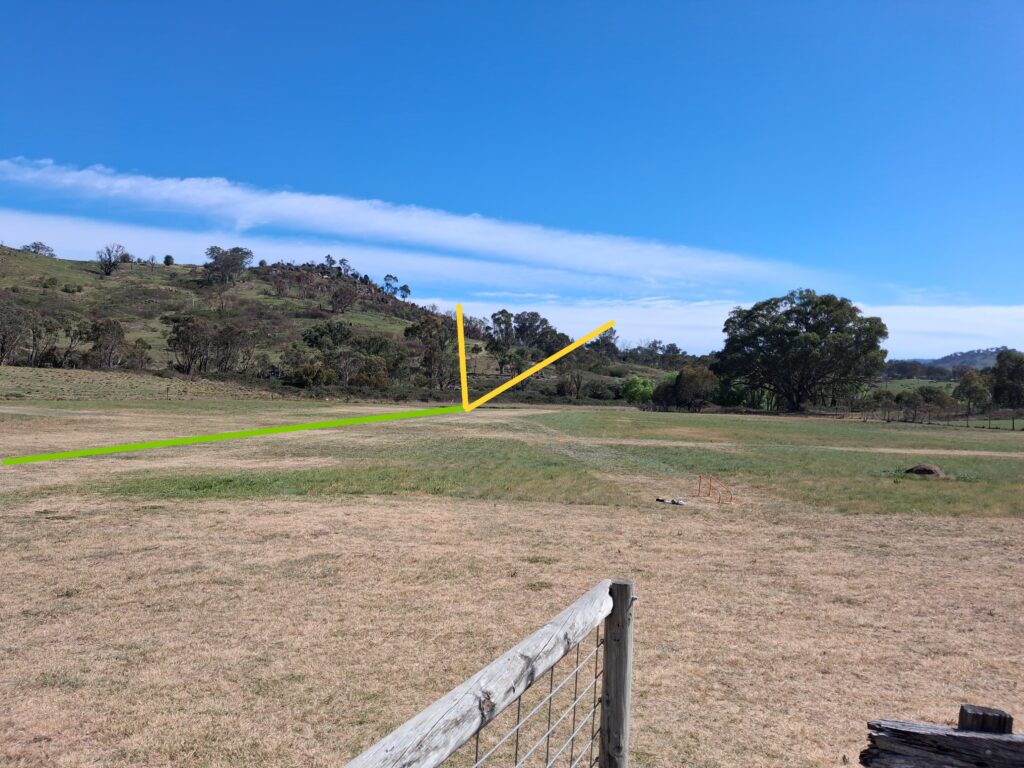
While we never land right on the end of the runway as I’ve shown in the pictures I am hoping that this will give you an idea of the landmarks to look for in the background of your model so you can get it down safely on the short grass, and not in the much rougher ‘outfield’ that can damage your model and bring your day to an early end.